
English| EUR
Suggested for you
More currencies
Choose a language
Rangiroa's Blue Lagoon sits inside the world's second-largest atoll, reachable only by boat across the main lagoon. The lagoon itself charges no admission, but the journey to reach it does. This guide explains what you pay, what that includes, and how the pricing structure works.
Quick answer
The blue lagoon entrance fee is 0 XPF—the lagoon itself is free to enter. Access requires a boat excursion from Avatoru or Tiputa, and tour operators charge for the round-trip crossing, which typically includes snorkeling equipment, a guide, and a motu picnic stop. The lagoon is open daily from 08:30 to 17:30, with arrival recommended between 08:30 and 16:00 for optimal light and full-day access.
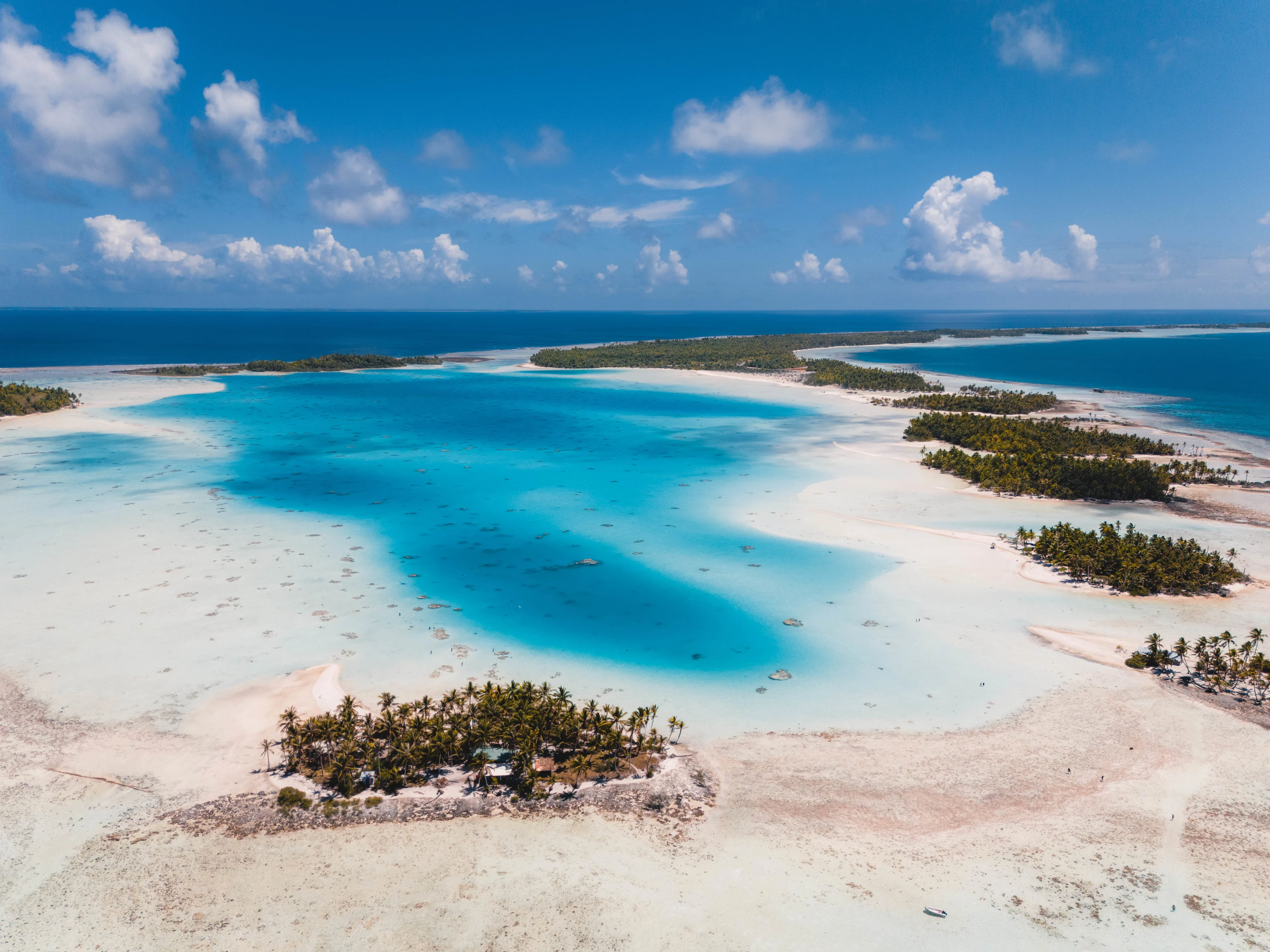
The Blue Lagoon at Rangiroa operates under a model uncommon among French Polynesia's natural sites: the lagoon basin itself levies no admission charge. What visitors pay for is the boat crossing required to reach it. The distinction matters because the blue lagoon entrance fee structure hinges entirely on the tour operator you select, not on a fixed municipal tariff. No dock, no overland route, and no scheduled ferry service exist—every arrival is by private or group excursion departing from Avatoru or Tiputa. The atoll's geography dictates the approach. Rangiroa's main lagoon spans over 1,600 square kilometers, and the Blue Lagoon—locally called Lagon Bleu—sits roughly 25 kilometers from the main villages. The shallow basin, ringed by coral motus and sandbars, holds water so transparent that the seabed remains visible at three meters. Tour boats cross the open lagoon in 45 to 60 minutes depending on wind and tide. Most operators bundle snorkeling gear, a guided reef stop, and a grilled lunch on one of the uninhabited motus. The journey itself becomes part of the experience, with dolphin sightings common along the route. Cost to visit Rangiroa's Blue Lagoon reflects fuel, crew, equipment, and the permit each operator holds for motu landings. Full-day excursions typically range from 8,000 to 12,000 XPF per person, though group size and inclusions shift the figure. Half-day trips run shorter and cheaper, but the abbreviated schedule sacrifices the midday light that renders the lagoon's palette most vivid. No standalone water-taxi service operates; every crossing is packaged as a guided tour. The lagoon maintains no staff, no facilities, and no built infrastructure beyond the natural coral shelf that forms its perimeter. Visitors wade, snorkel, and drift in water rarely deeper than waist height. The basin's isolation preserves its clarity—no outboard traffic within the lagoon itself, no anchoring permitted inside the coral ring. Operators moor outside and shuttle guests in by dinghy or on foot across the sandbar, depending on tide. Access to the Blue Lagoon follows the rhythm of the atoll's weather and sea state. Operators monitor wind forecasts closely; swells above one meter can scrub departures. The lagoon remains reachable year-round, though the dry season from May through October delivers the calmest crossings and the sharpest underwater visibility.
“The lagoon itself levies no admission charge—what visitors pay for is the boat crossing required to reach it.”
The Blue Lagoon on Rangiroa Atoll remains open to visitors daily throughout the week. Access is available during the following standard operating hours.
The best arrival window is 08:30–16:00 to ensure optimal lighting for water clarity and sufficient time for full-day excursions. Visiting during this period provides the most favorable conditions for observing the lagoon's distinct shallow water characteristics.
Dry season with temperatures 24°C–28°C
Lower humidity and less rainfall define these cooler, stable months.
Warm and humid, 26°C–30°C
Increased chance of brief tropical showers throughout these months.
—
Arriving early helps avoid the peak density of weekend tour groups.
Verdict: The best slot is between 08:30 and 16:00 during the dry season months of May through October.
The Blue Lagoon (Lagon Bleu) is situated on the southwestern edge of the Rangiroa Atoll. As there is no public road access to this remote site, all visitors must reach it via a boat excursion departing from the main villages of Tiputa or Avatoru.
Departure from Avatoru wharf
Departure from Tiputa pass area
Coordinate your departure with a licensed boat operator to ensure arrival within the optimal window of 08:30–16:00, which provides the best water visibility.
A full-day boat excursion to the Blue Lagoon requires sun protection, reef-safe gear, and adequate hydration.
Everything you need to know about blue lagoon entrance fee
The blue lagoon entrance fee is 0 XPF, as there is no direct charge to enter this natural site. Visitors reach this destination via boat excursions which incur a separate tour fee for transport and local services.
While you do not need an entrance ticket for the site itself, you must arrange a boat excursion to access the lagoon. These trips are the primary way to reach the remote location from the main atoll areas.
The cost associated with a Rangiroa Blue Lagoon tour covers your boat transfer, guide services, and often a picnic lunch. The actual entry to the water remains free of charge for all visitors.
It is not practical to reach the lagoon without a boat excursion due to the distance and navigational requirements of the Rangiroa atoll. Using a professional operator ensures safe passage and local logistical support.
There are no ticket tiers for the blue lagoon entrance fee because access to the environment is public. You only pay for the services provided by your chosen excursion operator.
The blue lagoon entrance fee is not part of any entry package since access is free. Please check with your excursion provider to understand what specific services are covered in your booking fee.